
India: RINL’s coking coal e-auction receives weak response amid weak steel market fundamentals

-
- Weak steel margins, ample inventories keep coking coal demand subdued
-
- Market expects further price correction in coking coal, fresh purchases delayed
Rashtriya Ispat Nigam Ltd’s (RINL) e-auction for 150,000 tof imported coking coal on 25 July 2026, comprising 75,000 t each of premium washed Goonyella Coking Coal and Brooks Run high-volatile coking coal, reportedly witnessed weak participation, with no bids received for the material, as per a company official.

Some sources mentioned that a few mills and traders showed interest in the high-grade Goonyella coking coal lot; however, no bids were ultimately submitted.
The cargoes were offered on an ex-Gangavaram and ex-Vishakhapatnam port basis. Industry participants attributed the weak response to a combination of subdued steel market conditions, cautious procurement strategies, and limited commercial attractiveness under the prevailing market environment.
Operational constraints, adequate inventories reduce procurement need:
According to market participants, RINL is currently holding comfortable coking coal inventories while operational issues related to its coke oven batteries have reportedly restricted its ability to efficiently utilise additional coking coal. Hence, it is looking to liquidate its stock. Given these constraints, procuring fresh raw material and converting it into coke for steelmaking is considered commercially unviable, particularly when steel margins remain under pressure.
Expectation of softer coking coal prices encourages buyers to wait:
Market participants noted that expectations of a further $10-15/t decline in seaborne premium hard coking coal prices prompted several buyers to postpone purchases in anticipation of more favourable pricing. With domestic steel demand remaining moderate and finished steel prices under pressure, most steelmakers continued to adopt a need-based procurement approach rather than rebuilding inventories.
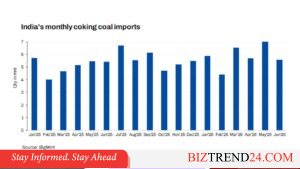
India’s coking coal imports decreased 25% m-o-m to 5.6 mnt in June from 7.5 mnt in May. Imports in May had increased on arrival of previously booked cargoes. Australia remained the largest supplier at 3 mnt, followed by Russia and the US. Tata Steel remained the largest importer, followed by JSW Steel and SAIL. Fresh bookings remained slow amid bid-offer disparities after mine accidents in Shanxi, China, lifted offers globally. Sufficient inventories with Indian mills and falling steel prices limited imports in June-July.
Outlook:
Imported coking coal demand is expected to remain subdued in August, as weak steel margins, comfortable inventories, and cautious procurement continue to weigh on buying interest. Expectations of further softening in seaborne coking coal prices are likely to encourage buyers to defer purchases, keeping procurement largely need-based. A sustained recovery in demand will depend on improved steel market fundamentals, higher operating rates at domestic steel mills and stronger steel and pig iron export demand.