

India: Alang’s ship-breaking scrap prices remain steady amid need-based trading activity

-
- Subdued steel demand leads to cautious sentiment
-
- Sponge iron offsets imported scrap shortage in Mandi
Ship-breaking melting scrap prices in Alang, Gujarat, remained unchanged d-o-d on 27 July, with HMS 80:20 assessed at INR 33,500/t ($348/t). Trading remained largely need-based as buyers refrained from building inventories in the absence of stronger finished steel demand. Stable domestic procurement, coupled with tight movement in processed scrap availabilithelped maintain a balanced market despite the lack of strong buying momentum.

Gujarat market update:
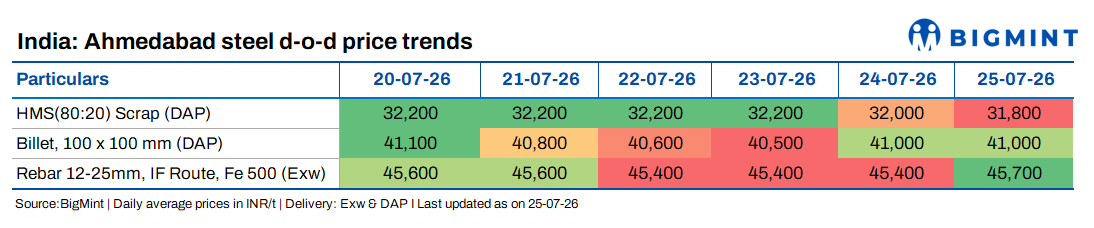
In Gujarat, sentiment improved modestly as billet and rebar prices edged higher on local trade activity. Bhavnagar billet prices increased by INR 100/t d-o-d to INR 40,700/t DAP, while Ahmedabad rebar prices rose by INR 200/t to INR 45,700/t ex-works. The gains reflected selective purchases rather than a broad-based recovery in demand, with market participants continuing to monitor downstream consumption before taking larger positions.
Mandi market update:
In Mandi Gobindgarh, billet, HMS (80:20) and rebar prices remained largely stable at INR 46,900/t , indicating balanced fundamentals in the secondary steel market. Imported scrap continued to remain largely absent as elevated offer prices and ongoing geopolitical uncertainties reduced its competitiveness against domestic alternatives.
The shortage of imported material has been partly offset by higher consumption of sponge iron, allowing mills to maintain production without significant disruption. However, sustained dependence on sponge iron could gradually increase raw material costs for secondary steel producersif imported scrap remains unavailable for an extended period.
Outlook:
The domestic scrap market is expected to remain largely stable in the near term. Weak finished steel demand, cautious procurement, and the continued absence of competitively priced imported scrap are likely to limit any sharp price movement, while selective buying and alternative raw material usage should continue to provide underlying market support.