

Japan: Kanto H2 export tender price slips by $12/t m-o-m as weaker JPY and sluggish Asian demand weigh on prices

-
- Dollar-equivalent tender value drops $17/t as yen remains near four-decade low
-
- Vietnam returns to the Kanto market after a month’s absence
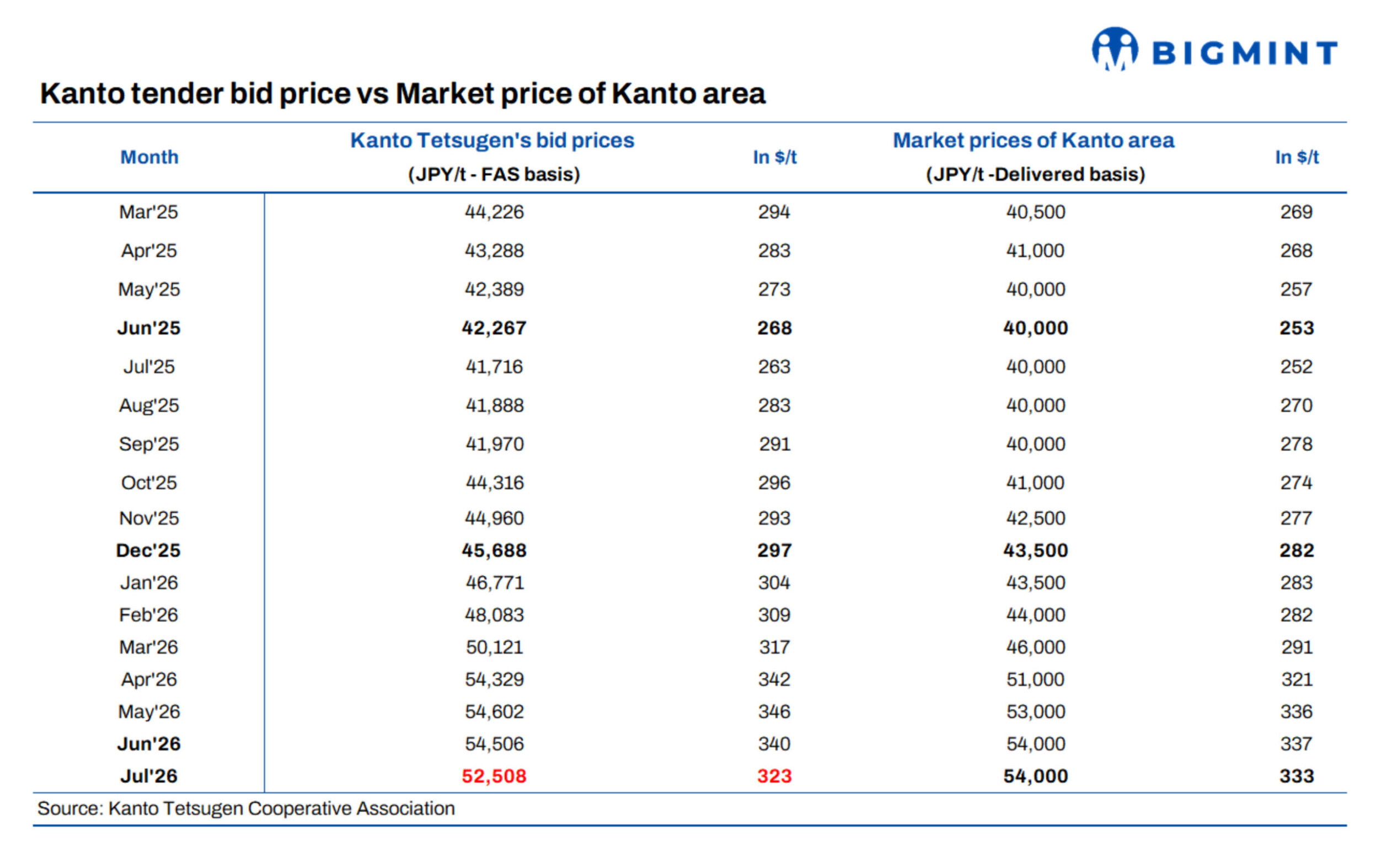
Japan’s July Kanto H2 export tender settled at JPY 52,508/t ($323/t) FAS for a 15,000 t cargo, down JPY 1,998/t ($12/t) from the previous month. The result marked the second consecutive monthly decline after eleven straight monthly gains, with the tender price returning to levels last seen in May 2024.

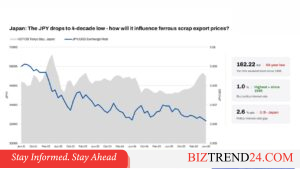
The decline was more pronounced in US dollar terms, with the tender value falling $17/t month-on-month from $340/t in June to $323/t in July. The sharper correction seen this year largely reflected the continued depreciation of the Japanese yen, which remained above JPY 162 per US dollar, hovering near its weakest level in almost four decades. The weaker currency has improved the competitiveness of Japanese scrap by lowering dollar-denominated export prices.
The cargo was awarded to a Japanese trading company, with market participants indicating that the material is likely destined for a southern Vietnam-based steelmaker. The latest result also marked Vietnam’s return to the Kanto tender after a one-month absence, with shipment scheduled for 31 August 2026.
The tender attracted 14 bids totalling 95,400 t against an offered volume of 15,000 t, although total bid volume declined by around 25,000 t from the previous month. The latest result also marked the first time in 18 months that total bidding volume fell below the 100,000 t mark.
Kanto domestic scrap prices remain stable:
The weaker Kanto export tender contrasted with the generally firm tone in Japan’s domestic scrap market. Domestic Kanto H2 prices remained largely stable m-o-m at around JPY 54,000/t ($333/t), supported by steady mill procurement. Despite the lower dollar-denominated tender outcome, domestic mill purchase prices continued to exceed prevailing Tokyo Bay export offers of around JPY 53,000/t ($326/t), based on the latest available market levels. The premium of domestic buying prices over export offers indicates that mills continue to compete for scrap amid constrained availability.
Following the tender results, Tokyo Steel reduced its H2 scrap purchase prices by JPY 1,000/t ($7/t) at most of its works, except the Tahara plant. Market participants viewed the move as a cautious adjustment to the softer export tender rather than a reflection of weakening domestic fundamentals.
 Market comments:
Market participants estimated the tender equates to around $360-365/t CFR Vietnam, broadly in line with prevailing buyer targets. A Vietnam-based trading company source told BigMint, “Scrap demand in Vietnam remains fairly stable, but finished steel prices have continued to decline. Mills are targeting $365-370/t CFR and are now sourcing from multiple origins. There were no buyers from South Korea or Taiwan this time, so today’s result makes sense.”
The source added that the weaker Japanese yen continued to enhance the competitiveness of Japanese scrap, although subdued demand across Asia limited its impact on buying activity.
A Japanese trader also noted that Bangladesh did not participate in this month’s tender, as the domestic steel market remains under pressure from weak finished steel demand, rising electricity tariffs, higher production costs, and intermittent power shortages. As a result, mills have continued to limit purchases to need-based procurement. The trader added that the lower tender result was driven primarily by the weaker yen and subdued overseas demand.
The absence of Bangladeshi bulk buyers, traditionally active participants in the Kanto tender, underscores the cautious sentiment across Asian import markets, where mills continue to prioritise low inventories and need-based raw material purchases amid weak steel demand.
Outlook
The weaker yen is expected to keep Japanese scrap competitively priced across Asian export markets and could encourage exporters to offer additional cargoes in the coming weeks. However, currency support alone is unlikely to drive higher export volumes unless steel demand improves in key importing markets. With many Asian mills maintaining cautious procurement strategies and low inventory levels, Japanese exporters may need to remain flexible on pricing to secure fresh bookings. Against this backdrop, the August Kanto export tender, scheduled for the second week of August, will be closely watched for indications of whether export prices stabilise or face further downward pressure.


