

India’s crude steel capacity rises 10% y-o-y in FY’26, on track to reach nearly 300 mnt by FY’30

-
- FY’26 expansions concentrated in IF-based route; Odisha leads growth
-
- IF share to fall to 34% by FY’30 as BOF-based production gains ground
-
- Odisha to contribute 40% of total steel capacity additions over FY’25-30
Morning Brief: India’s crude steel production capacity rose 10% y-o-y to 233 million tonnes (mnt) per annum in FY’26, according to BigMint data. Capacity is projected to rise further to 298 mnt by FY’30, in line with the National Steel Policys long-term target of building a 300-mnt steel industry by 2030-31.
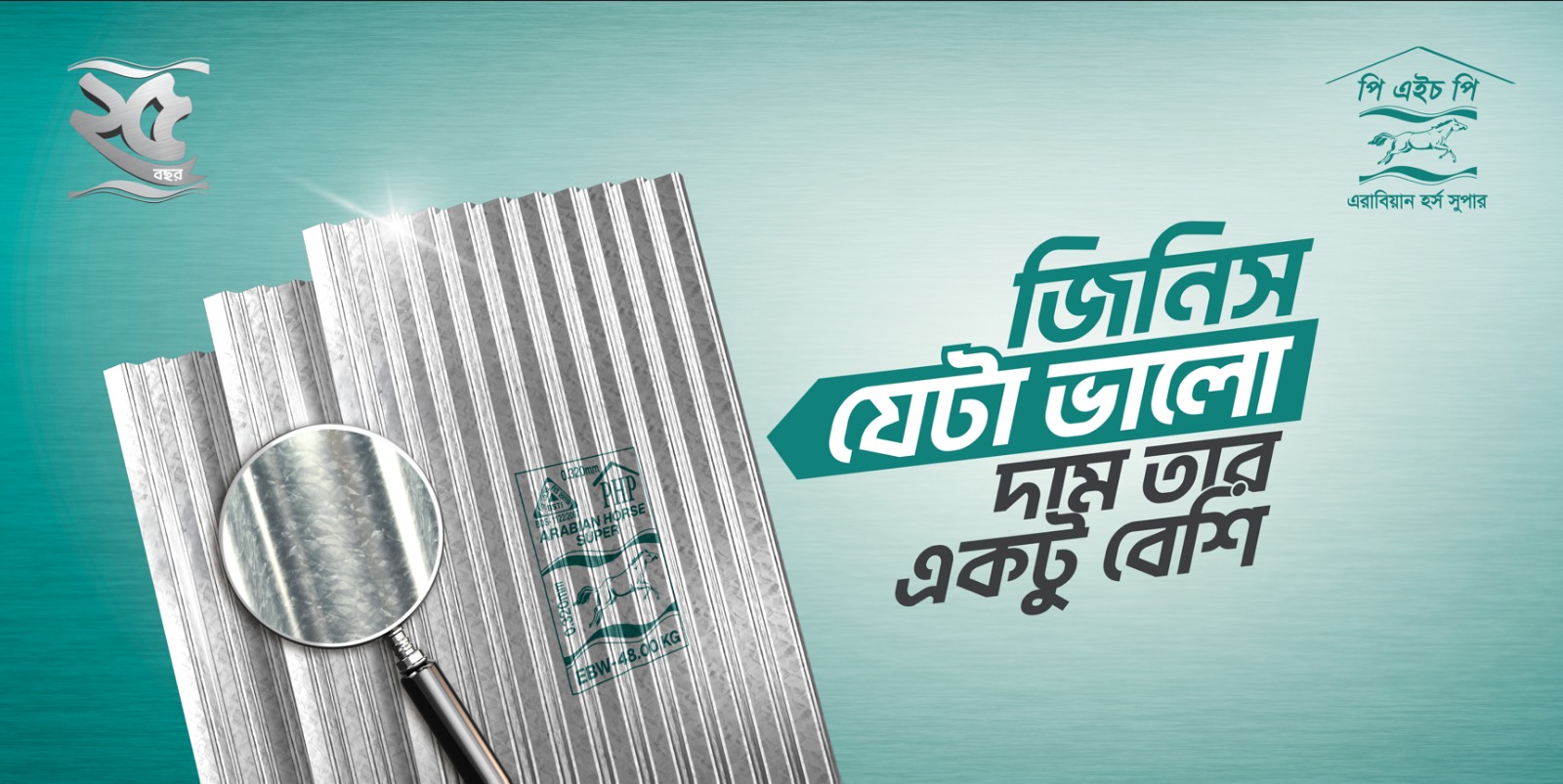
While FY’26 growth was led largely by secondary steelmakers, the next phase of expansion is expected to be dominated by integrated steel producers (ISPs) executing blast furnace-basic oxygen furnace (BF-BOF)-based projects, especially in eastern and coastal India.
IF steelmakers drive FY’26 growth, ISPs to lead FY’30 ramp-up
In FY’26, the expansion was driven primarily by smaller, regional induction furnace (IF)-based steelmakers, whose total capacity rose 16% y-o-y to 91 mnt. The growth reflected continued expansion in construction-linked long steel production, supported by relatively lower capital requirements and strong regional demand.
Total BOF capacity increased 7% to 96 mnt in FY’26, supported largely by integrated steel producers. For example, Jindal Steel completed its 6 mnt expansion at Angul, Odisha, by commissioning its third BOF of 3 mnt.
Meanwhile, electric arc furnace (EAF) capacity increased 6% to 46 mnt. Notably, in March 2026, Tata Steel commissioned its 0.75 mnt/year scrap-based EAF facility at Ludhiana
By FY’30, India’s steelmaking mix is expected to tilt further towards BOF-based production. Total BOF capacity is projected to surge to 142 mnt, increasing its share in the overall steelmaking mix to 48% from 42% in FY’25.
This indicates that India’s steel industry is prioritising scale, raw material integration, and higher-grade steel production capabilities through conventional integrated steelmaking routes. Such capacities are critical for automotive steel, pipelines, engineering-grade products, and renewable energy infrastructure.
In contrast, EAF capacity is projected to rise only modestly to 55 mnt by FY’30, while its share remains broadly stable at around 19-20%, reflecting structural constraints with scrap supply. IF capacity is expected to cross 100 mnt by FY’30, though its overall share may decline to 34% as integrated expansions accelerate at a faster pace.
The data suggests India’s decarbonisation pathway may differ from developed economies, where scrap-based EAF production dominates capacity additions. India’s steel sector appears likely to remain iron ore-intensive over the medium term due to abundant domestic ore availability, lower scrap generation, and the need for rapid capacity creation.
Odisha strengthens dominance:
At the state level, Odisha emerged as the largest contributor to India’s steel capacity growth in FY’26. The state’s capacity rose sharply by 22% y-o-y to 45 mnt, making it India’s largest steel-producing state by installed capacity. Odisha continues to attract investments due to abundant iron ore reserves, port connectivity, lower logistics costs, and the presence of established steel clusters.
By FY’30, Odisha is projected to further consolidate its dominance, with capacity expected to rise to 72 mnt. This would account for nearly one-fourth of Indias total crude steel capacity. Odisha alone is expected to contribute about 40% of Indias total incremental steel capacity additions between FY’25 and FY’30.
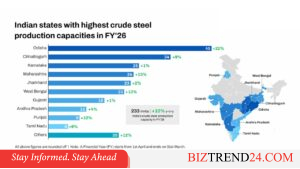
Among other emerging growth centres, Andhra Pradesh stands out, with capacity projected to more than double to 22 mnt by FY’30 as coastal greenfield complexes break ground. For example, AM/NS India will establish a new integrated steel plant at Rajayyapeta in Anakapalli, with production targeted by the first quarter of 2029.
Gujarat is also expected to see strong growth, with capacity rising to 22 mnt, supported by coastal industrialisation and downstream manufacturing demand.
The concentration of new projects in Odisha, Andhra Pradesh and Gujarat indicates a gradual shift toward coastal steelmaking hubs, where proximity to ports lowers freight costs for imported coking coal and improves export competitiveness.
Outlook:
As per BigMint’s projections, India’s crude steel production capacity is set to rise 6% in FY’27 — at a slower pace than in FY’26-with the total coming to 246 mnt. Expansion will be led by the BOF route, up 5% y-o-y, and by IF facilities, whose capacity is set to rise 6%.
The sharp rise in FY’26 approvals also reinforces the strong medium-term growth trajectory of the industry, with steel capacity approvals more than doubling y-o-y to 50 mnt. Much of the pipeline is concentrated in integrated BOF-based projects, indicating that large producers are accelerating long-term expansion plans.
However, capacity additions may outpace demand growth in some segments, particularly long products, increasing pressure on utilisation rates and margins among smaller secondary producers. Integrated steelmakers are likely to remain better positioned due to scale advantages, captive raw material linkages, and stronger exposure to flat steel demand.
At the same time, the BOF-led expansion cycle suggests carbon intensity will remain a long-term challenge as global markets increasingly move towards carbon-linked trade mechanisms and green steel standards.


